
How to Reduce Production Costs in PET Bottle Manufacturing
Introduction
In today’s competitive packaging market, manufacturers are under constant pressure to lower production costs while maintaining high bottle quality. Resin prices fluctuate, energy costs are rising, and customer expectations continue to increase. As an engineer at Link-Tech Machinery, I’ve worked with factories of all sizes — from small water bottlers to large beverage groups — helping them optimize their operations and significantly reduce production expenses.
The good news is that cost reduction doesn’t require sacrificing bottle strength or clarity. With the right strategies in machine operation, material management, and production planning, you can achieve lower costs and higher profitability. In this article, I’ll share the most effective ways to reduce production costs in PET bottle manufacturing.
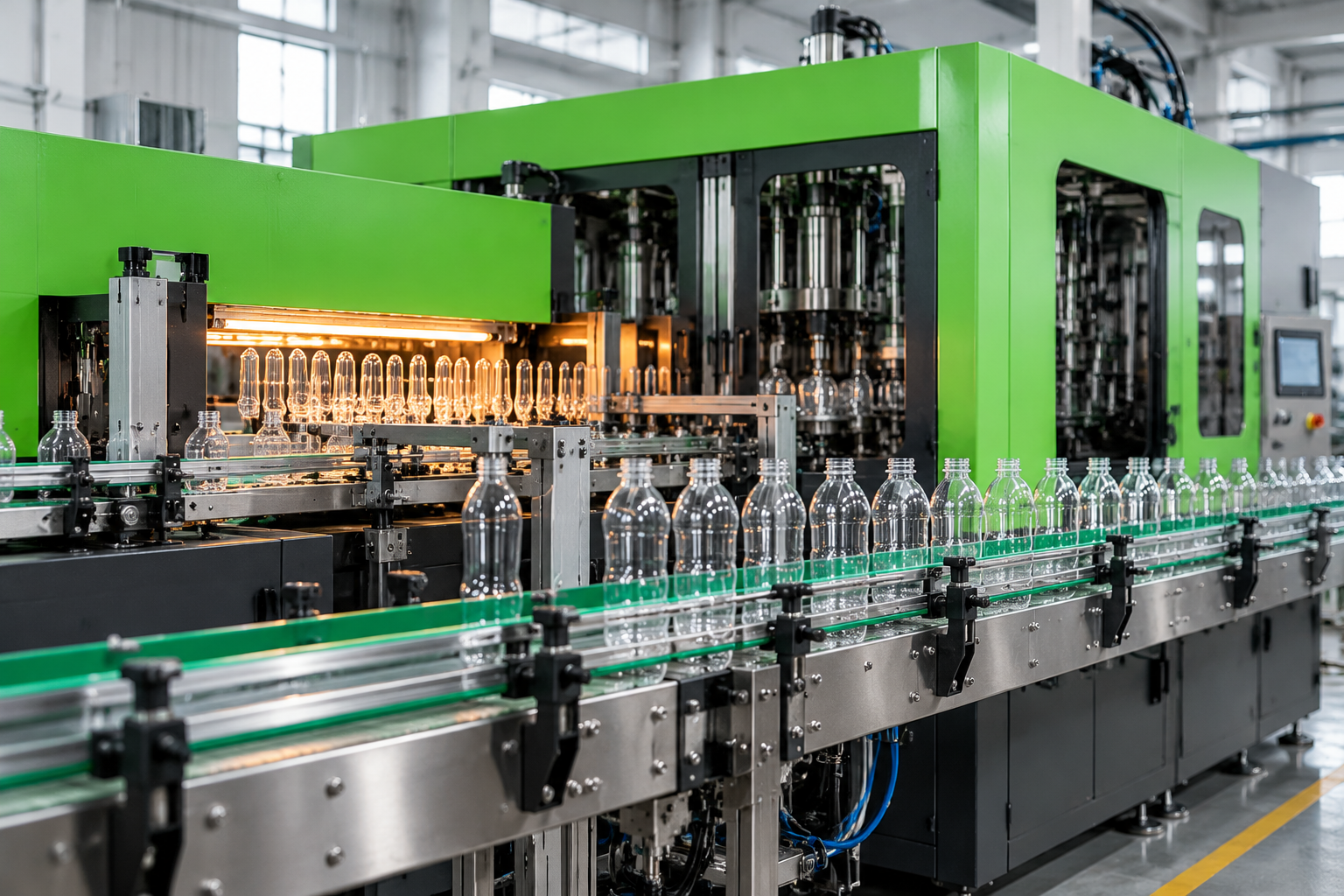
1. Optimize Preform Weight (Lightweighting)
Resin is the largest cost component in PET bottle production — often accounting for over 60% of total cost. Even a 1–2 gram reduction per bottle can save thousands of dollars per month.
Ways to safely reduce preform weight:
Redesign preforms with better wall distribution
Use optimized base designs for lightweight bottles
Improve stretching accuracy to maintain strength even with thinner walls
Match preform weight precisely with bottle usage
We help customers reduce preform weight by 8–15% through engineering adjustments and mould redesign, without affecting quality.
2. Improve Energy Efficiency
Energy consumption — especially from heating and air systems — is another major cost driver.
Reduce energy use by:
• Optimizing heating lamp power
Multi-zone heating ensures only the necessary heat is applied.
• Using intelligent power control in ovens
Link-Tech systems automatically adjust lamp power based on preform temperature.
• Implementing air recovery systems
Reusing high-pressure air can cut compressor costs by 25–30%.
• Improving cooling efficiency
Clean cooling channels and a good chiller reduce cycle time and electricity use.
Energy-efficient equipment often pays for itself within months.
3. Reduce Defect and Scrap Rates
Every rejected bottle represents wasted preforms, energy, labor, and time. Lower scrap rates = lower production cost.
Common defect causes include:
Improper heating
Poor mould cooling
Air pressure instability
Worn stretch rods
Misaligned moulds
Solutions:
Regularly calibrate heating zones
Clean moulds and cooling channels
Check air valves and compressors weekly
Train operators to detect issues early
Many factories reduce scrap rates from 5% to under 1% through proper machine optimization.
4. Increase Cycle Speed Without Losing Quality
Faster cycle times lead directly to lower cost per bottle.
Improve speed by optimizing:
Oven temperature profile
Mould cooling efficiency
Air pressure settings
Stretching timing
Preform heating consistency
Link-Tech’s machines use advanced servo systems and fast cooling moulds that increase output without compromising bottle quality.
5. Use High-Quality Preforms to Avoid Hidden Costs
Low-quality preforms cause:
Uneven stretching
Hazy bottles
Thin walls
Higher defect rates
Machine downtime
Saving money on cheap preforms usually results in higher long-term production cost.
We advise factories to choose reputable preform suppliers or work with us to select the right preform design for their bottles.
6. Improve Mould Maintenance
A worn or poorly cooled mould stops the entire line from running efficiently.
Cost-saving mould care includes:
Polishing cavities to improve surface finish
Cleaning cooling channels to reduce cycle time
Replacing worn neck rings
Checking mould alignment regularly
A well-maintained mould can last 5–10 years, greatly reducing replacement costs.
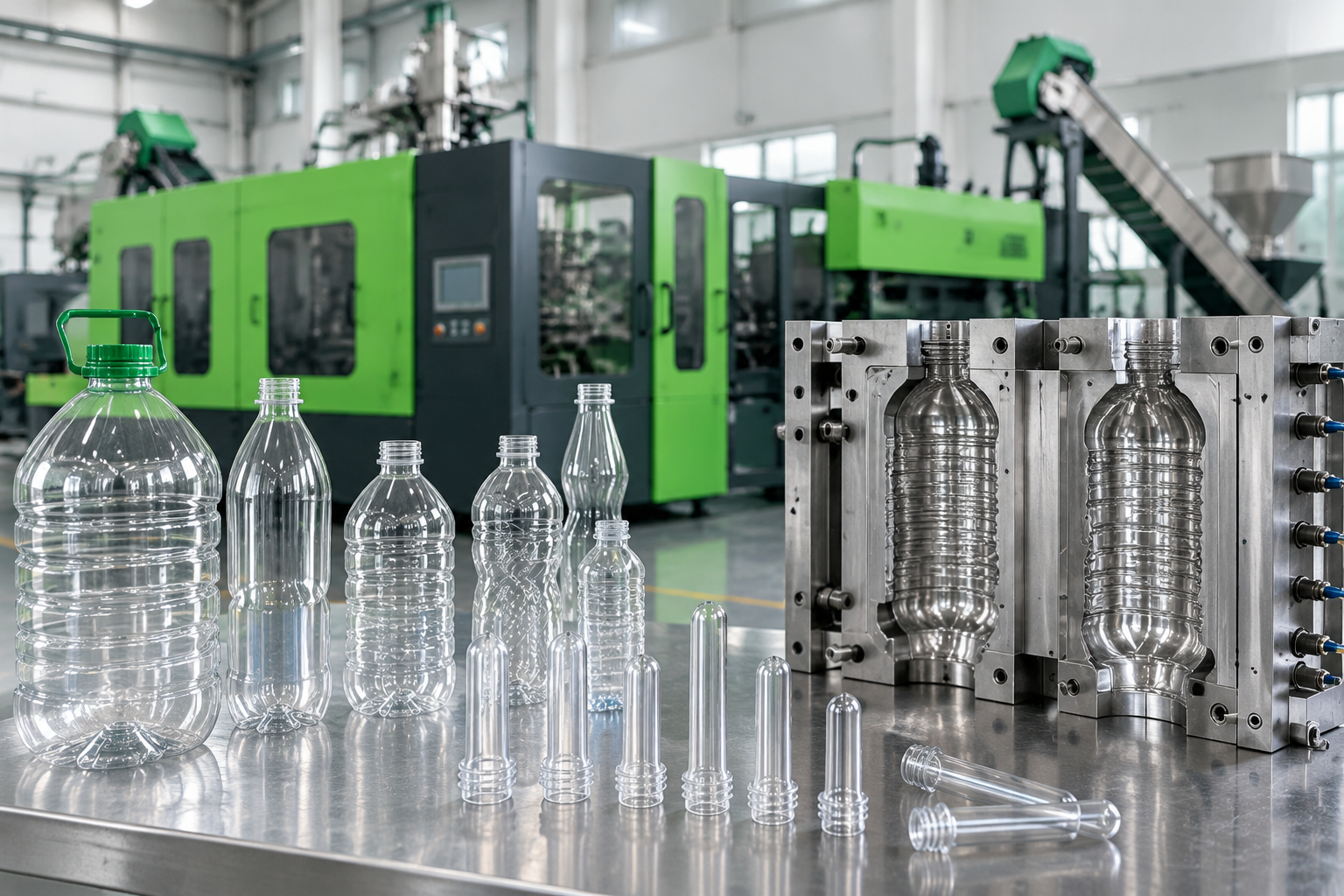
7. Reduce Labor Costs Through Automation
Fully automatic blow molding machines help reduce labor costs significantly, especially in regions where wages are rising.
Benefits of automation:
Consistent production
Lower defective rates
Less operator involvement
24-hour operation capability
Better safety and fewer manual steps
Many factories transitioning from semi-automatic to fully automatic machines cut labor costs by 40–60%.
8. Streamline Production Planning
Unorganized production increases downtime, wastes energy, and complicates logistics.
Plan efficiently by:
Running large batches of the same bottle first
Scheduling mould changes during low-demand hours
Ensuring preforms are dried and ready
Coordinating production with sales forecasts
Good planning is a major cost saver for factories of any size.
9. Invest in Reliable Equipment
Low-cost machines often lead to:
Frequent breakdowns
High maintenance costs
High scrap rates
Poor energy efficiency
Shorter lifespan
A high-quality machine from Link-Tech offers:
Stable long-term performance
Lower operating costs
Precision controls
Energy efficiency
Lifetime support
High-quality equipment reduces cost in every part of the process.
Conclusion
Reducing production costs in PET bottle manufacturing is not about cutting corners — it’s about optimizing every step of the process. From
lightweighting and energy savings to better mould design, proper preventive maintenance, and automation, you can lower costs while
improving quality.
At Link-Tech Machinery, we help factories worldwide reduce operational expenses with efficient machines, optimized moulds, and expert
technical support. If you’re looking to lower your production cost or upgrade your equipment, contact our engineering team today —
we’re here to help you grow sustainably.


